
The dog built for a badger's tunnel
Three hundred years ago, German hunters bred a dog to crawl underground. Today it's a top-five breed in America, and its shape is both the attraction and the problem.
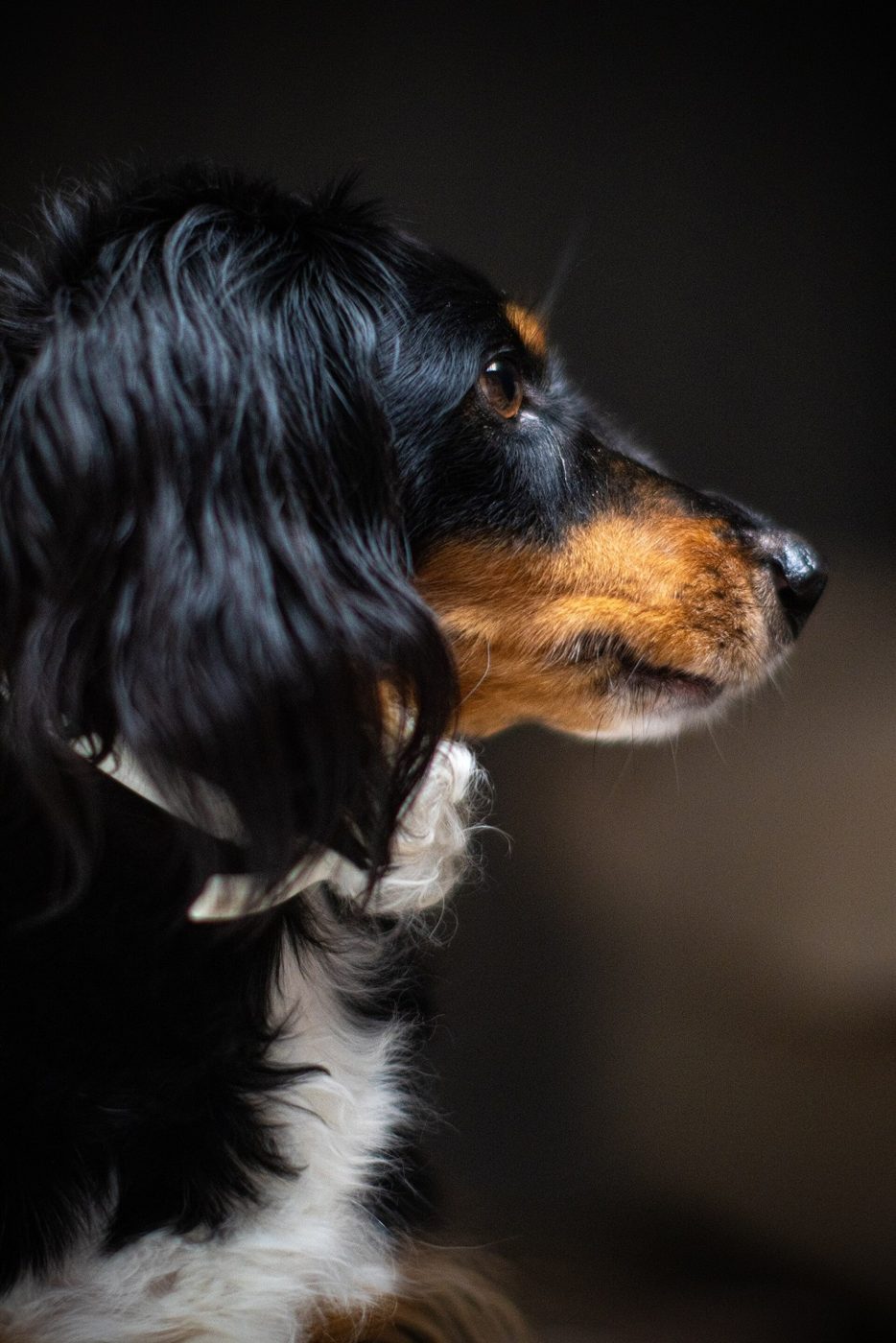
- Origin
- Germany
- Group
- Hound
- Weight
- 7.5–14.5 kg (standard)
- Life expectancy
- ≈ 13 years
- US popularity
- No. 5 (2025)
Built for the burrow
The name gives the job away. Dachshund is German for badger dog: Dachs means badger, Hund means dog. In Germany most people just say Dackel; hunters say Teckel [1].
The dog was bred to scent, chase and flush badgers and other burrowing animals out of their tunnels. The miniature was bred for rabbits [1]. The first reliable mentions appear in German books from the early 1700s, under names like Dachs Kriecher (badger crawler) and Dachs Krieger (badger warrior) [1].
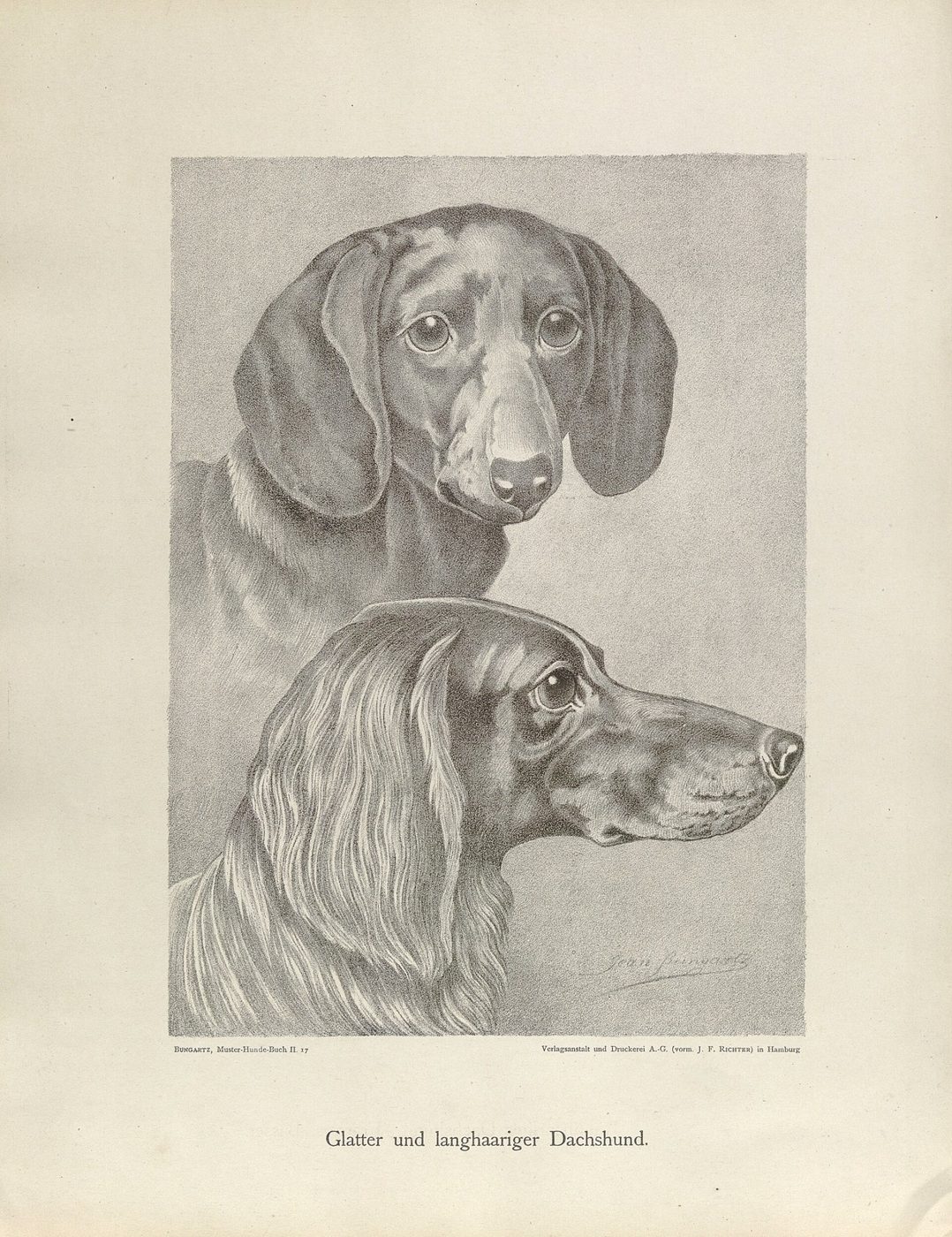
Where it came from before that, nobody really knows. Even in 1891 an American dog book admitted it:
The origin of the Dachshund is in doubt, our best authorities disagreeing as to the beginning of the breed.
What we do know: the early German dogs were bigger than today’s.
Badgers were only part of the work. Dachshunds also chased rabbits and foxes, tracked wounded deer and, in packs, hunted wild boar [1]. The breed comes in three coats: smooth (the oldest), long, and wire, which arrived last, in the late 1800s [1].
One extra gene
The legs are the strangest part of the story. They began as an accident in the genome.
In 2009, researchers at the US National Human Genome Research Institute compared the DNA of 835 dogs. The short legs of dachshunds, corgis, basset hounds and at least sixteen other breeds all traced back to one event: an extra copy of a growth gene called FGF4 that slipped into the dog genome early in the history of domestic dogs [3].
That copy makes too much growth protein, and the long bones of the legs stop growing early. The trait, chondrodysplasia, is written into the breed standard of more than a dozen breeds [3].
We were surprised to find that just one retrogene inserted at one point during the evolution of a species could yield such a dramatic physical trait.
The price of the shape
In 2017 a second team found a second extra copy of the same gene, this one on chromosome 12. It does more than shorten legs: it changes the discs between the vertebrae, and dogs that carry it have more than fifty times the odds of type I intervertebral disc disease (IVDD) [4]. In dachshunds its frequency is above 90% [5].
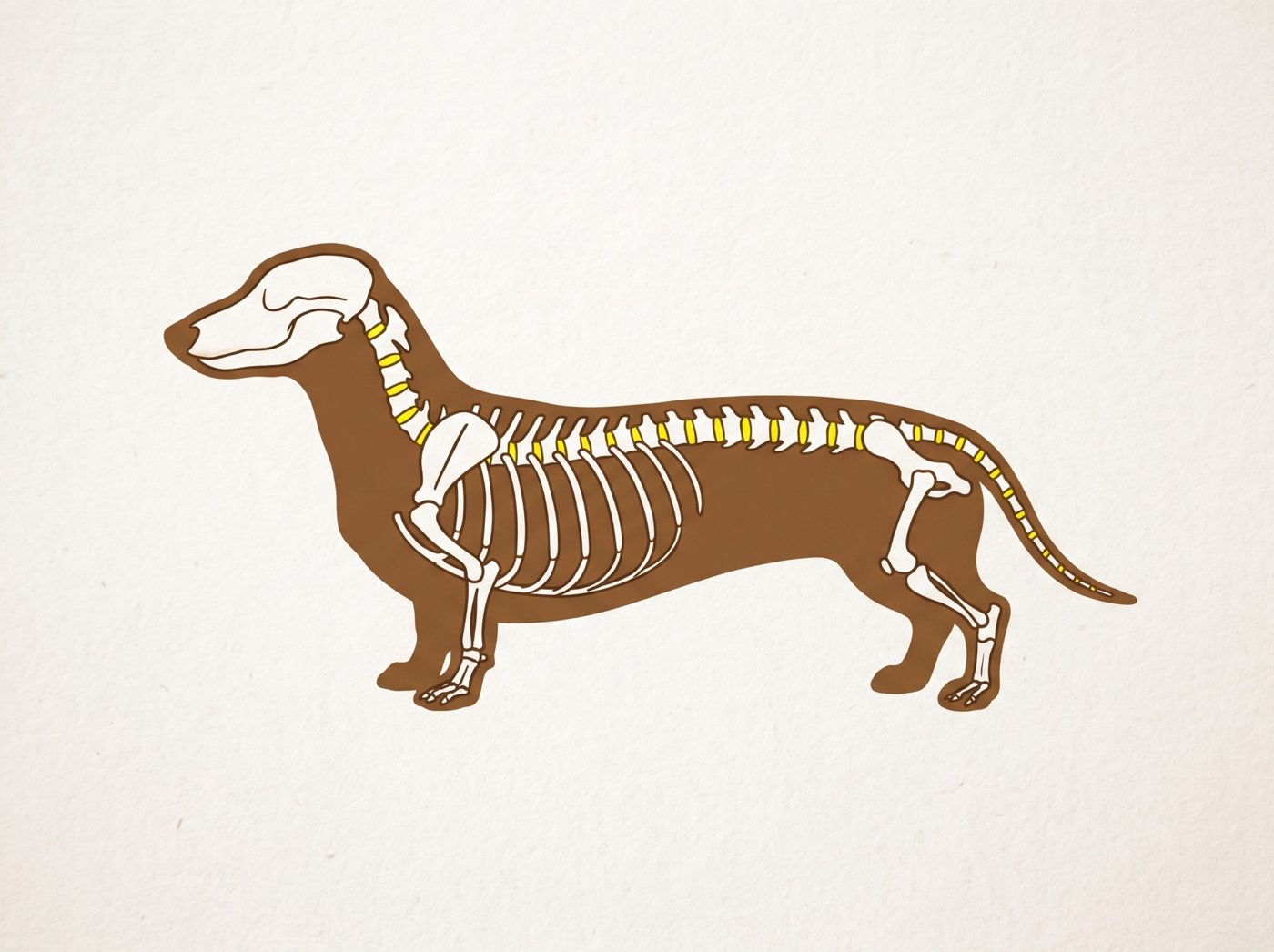
Treatment ranges from crate rest and painkillers to surgery, and some paralysed dogs get around in a wheeled cart [1].
There is good news. Dachshunds tend to live long: a 2024 UK study put their life expectancy at 13.2 years, above the 12.7-year average for purebreds [1]. And because calcified discs in young dogs are highly heritable, Finland and the UK now run screening programmes to breed the problem down [1].
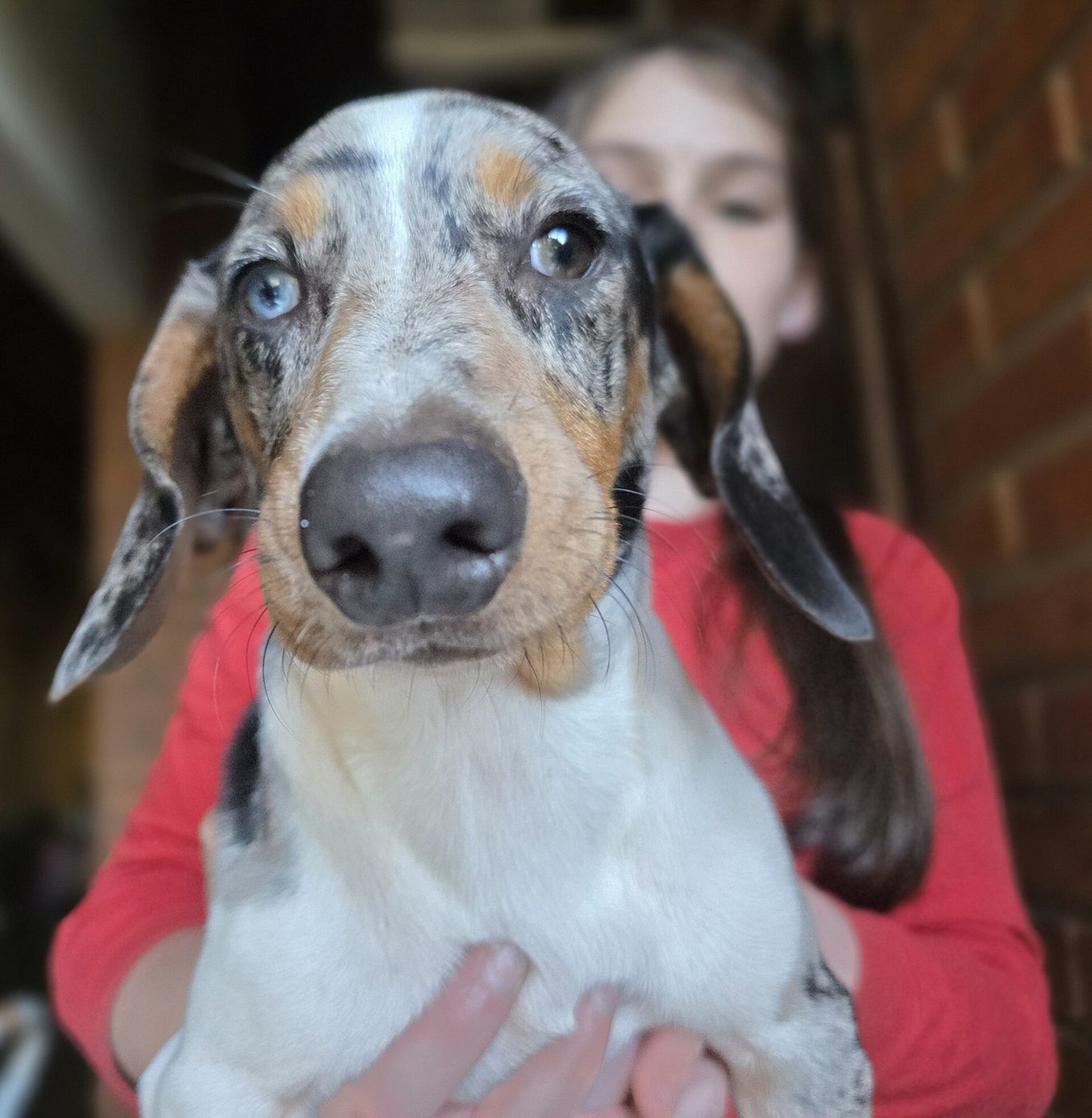
Looks carry risks too: when two dapple genes meet, puppies can be born with vision or hearing problems [1].
The enemy’s dog
The dachshund became a symbol of Germany. Kaiser Wilhelm II kept them, and cartoonists used the breed to mock the country [1]. In the First World War its popularity in the United States collapsed; some called it the liberty hound, just as sauerkraut became liberty cabbage [1]. The American Kennel Club even tried calling them “badger dogs”. It didn’t stick [8].
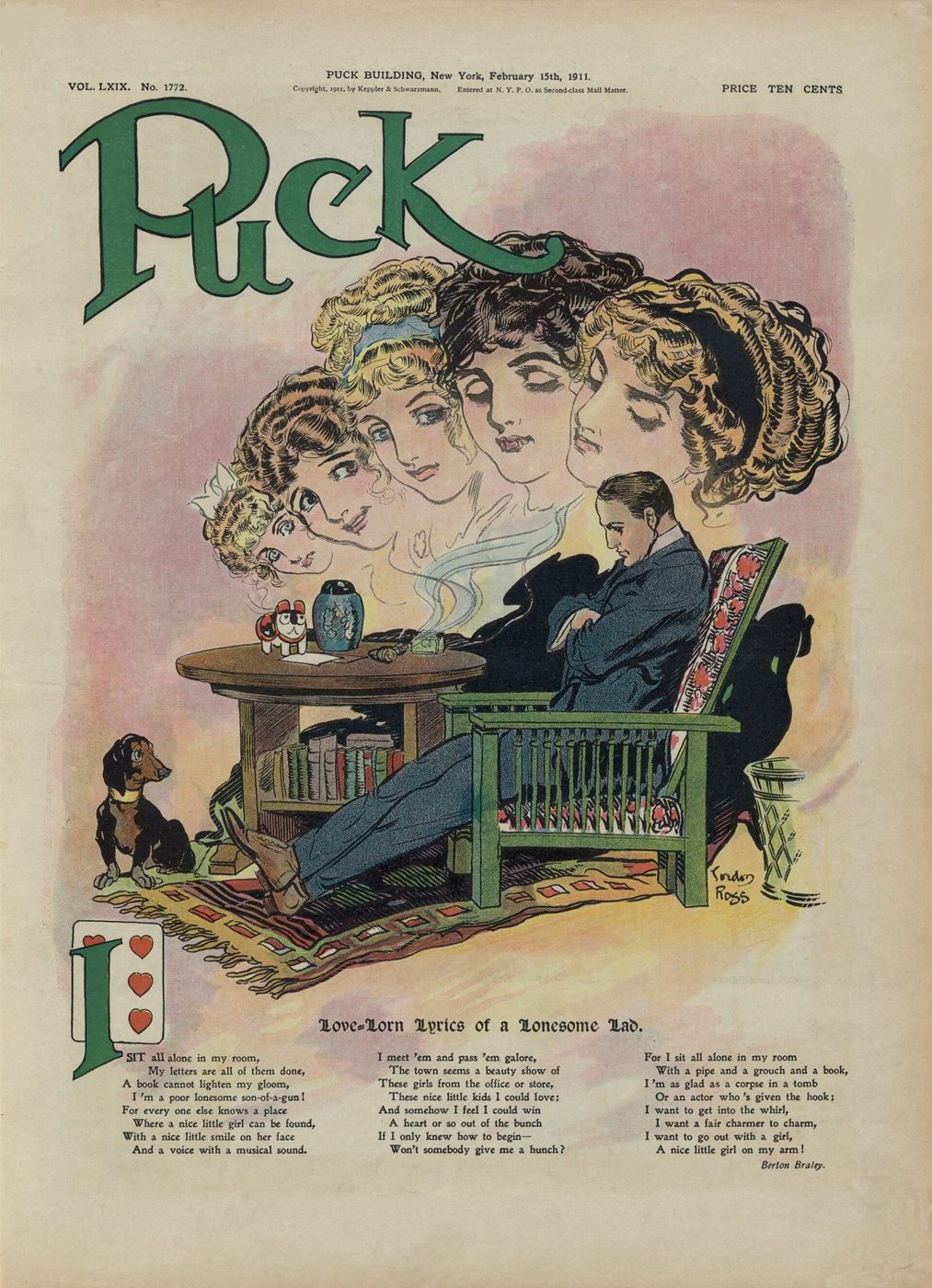
Germany kept its Dackel close. Munich chose a dachshund, Waldi, as the first official Olympic mascot for the 1972 Summer Games, and laid out the marathon route in Waldi’s shape: head facing west, the mouth through Nymphenburg Park, the tail in the English Garden [6] [7].
- Early 1700sFirst reliable mentions: the "badger crawler"
- 1885Recognised by the American Kennel Club
- 1914–18First World War: the "liberty hound"
- 1972Waldi, the first official Olympic mascot
- 2009The short-leg gene is found
- 2025Top five in the US for the first time
From burrow to sofa
In 2018 the dachshund ranked 12th in the American Kennel Club’s registrations [1]. In 2025 it broke into the top five for the first time, pushing the poodle out [2]. It ranks third in Los Angeles and makes the top five in Denver and Oakland [9].
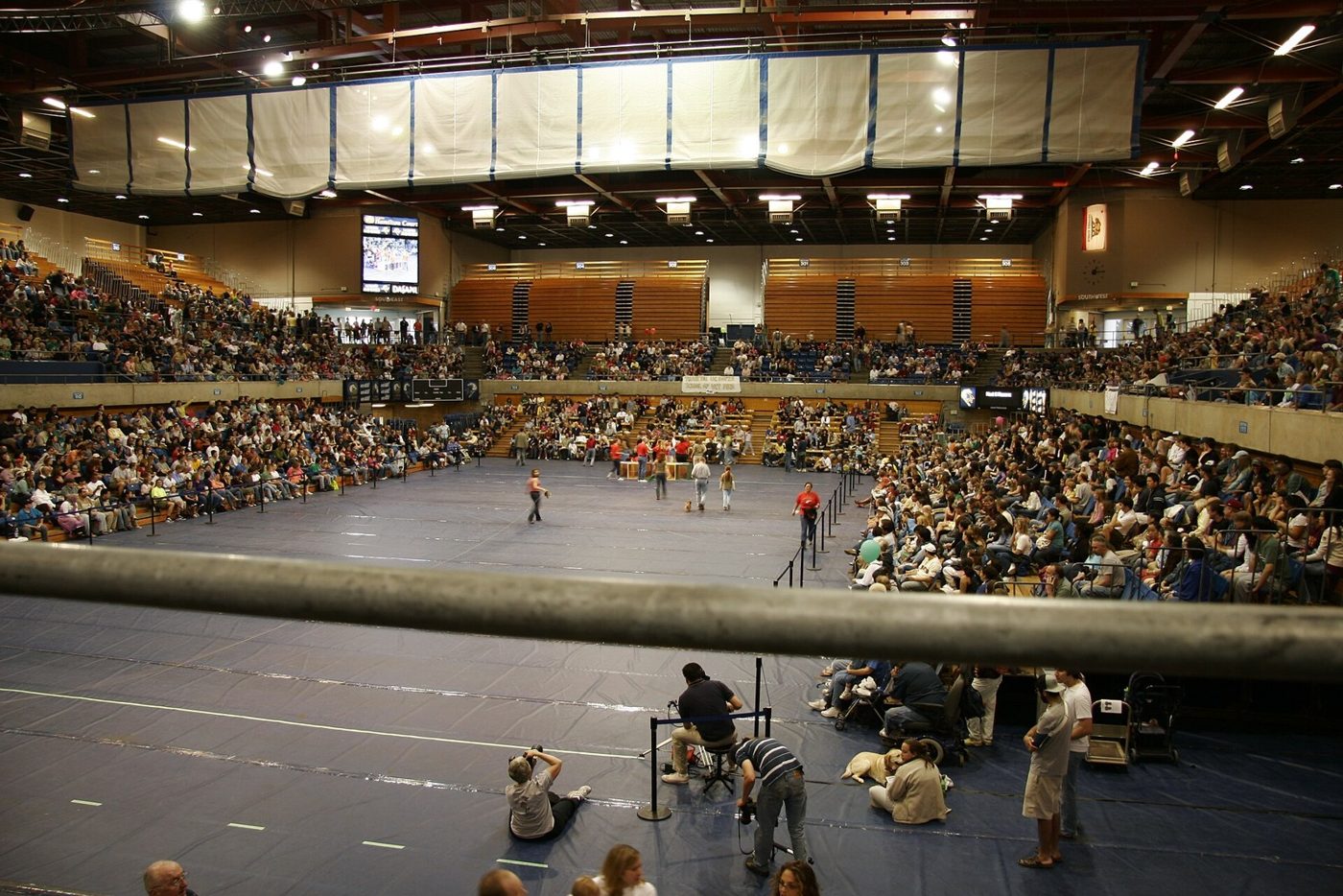
The shape is now entertainment: wiener dog races draw thousands of spectators, though the Dachshund Club of America opposes them because of the risk to the dogs’ backs [1]. The old instinct survives elsewhere too: in earthdog trials, dachshunds work through tunnels to find a rat that sits safely in a cage [1]. See Earthdog: the sport that lets diggers dig.
Three hundred years ago, people shaped this dog to fit a tunnel. The next job is to shape it for a back that lasts.
Sources
- Wikipedia: Dachshund
- American Kennel Club: Most popular dog breeds of 2025
- NHGRI (2009): Evolutionary event underlying the origin of dachshunds and other short-legged dogs
- Brown et al., PNAS (2017): FGF4 retrogene on CFA12 is responsible for chondrodystrophy and IVDD in dogs
- Dickinson & Bannasch, Frontiers in Veterinary Science (2020): Genetics of intervertebral disc degeneration
- Wikipedia: Waldi
- Olympics.com: Munich 1972 mascot
- American Kennel Club: Dachshund facts you may not know
- American Kennel Club: 2025's most popular dog breeds by city
- Cornell Riney Canine Health Center: Intervertebral disc disease
Keep reading
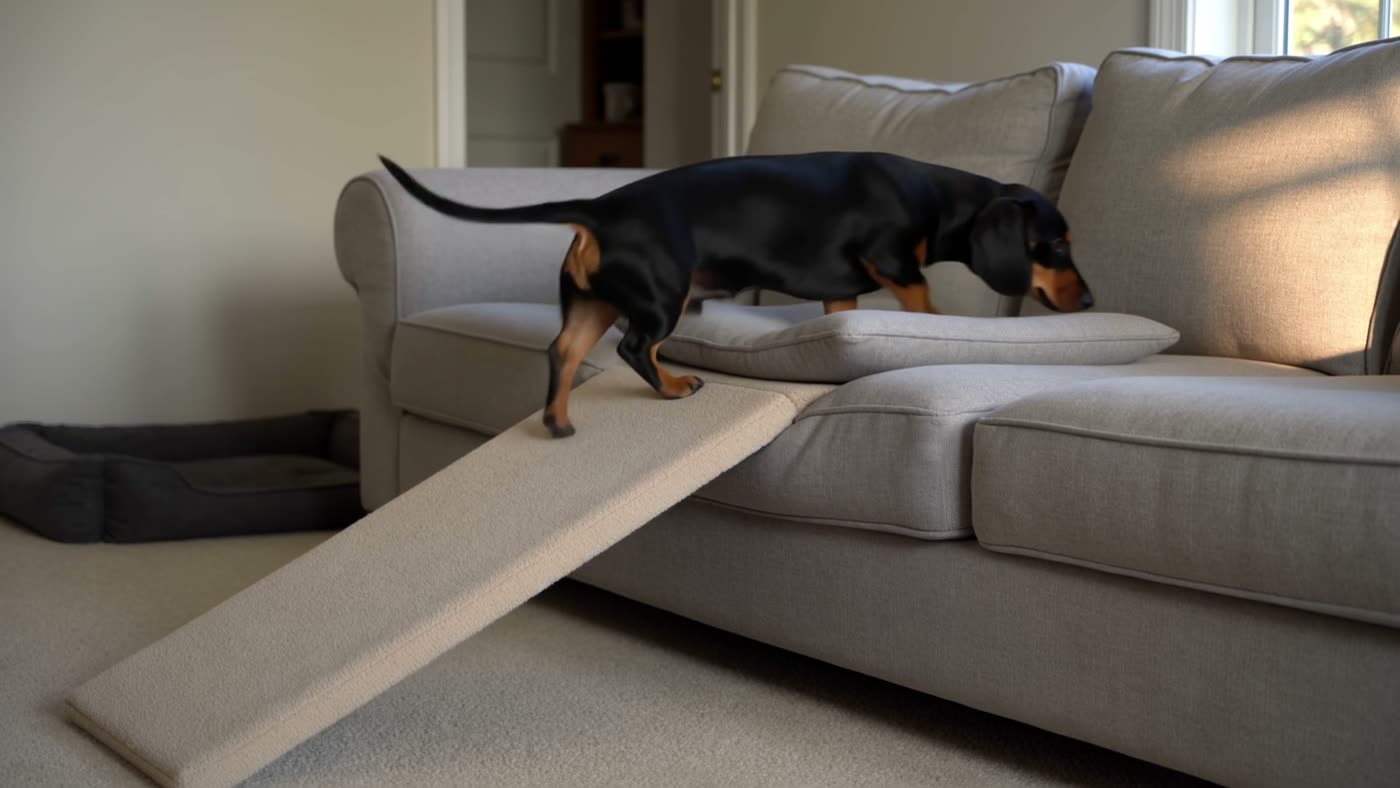
Dog ramps and stairs: what to look for
Vets advise cutting down on jumps for long-backed dogs. A ramp only helps if your dog will use it. These are the checks that decide that.
Back care for long dogs: IVDD explained
Intervertebral disc disease is the most common cause of back pain in dogs. Here is what it is, which signs mean 'call the vet today', and what you can change at home.
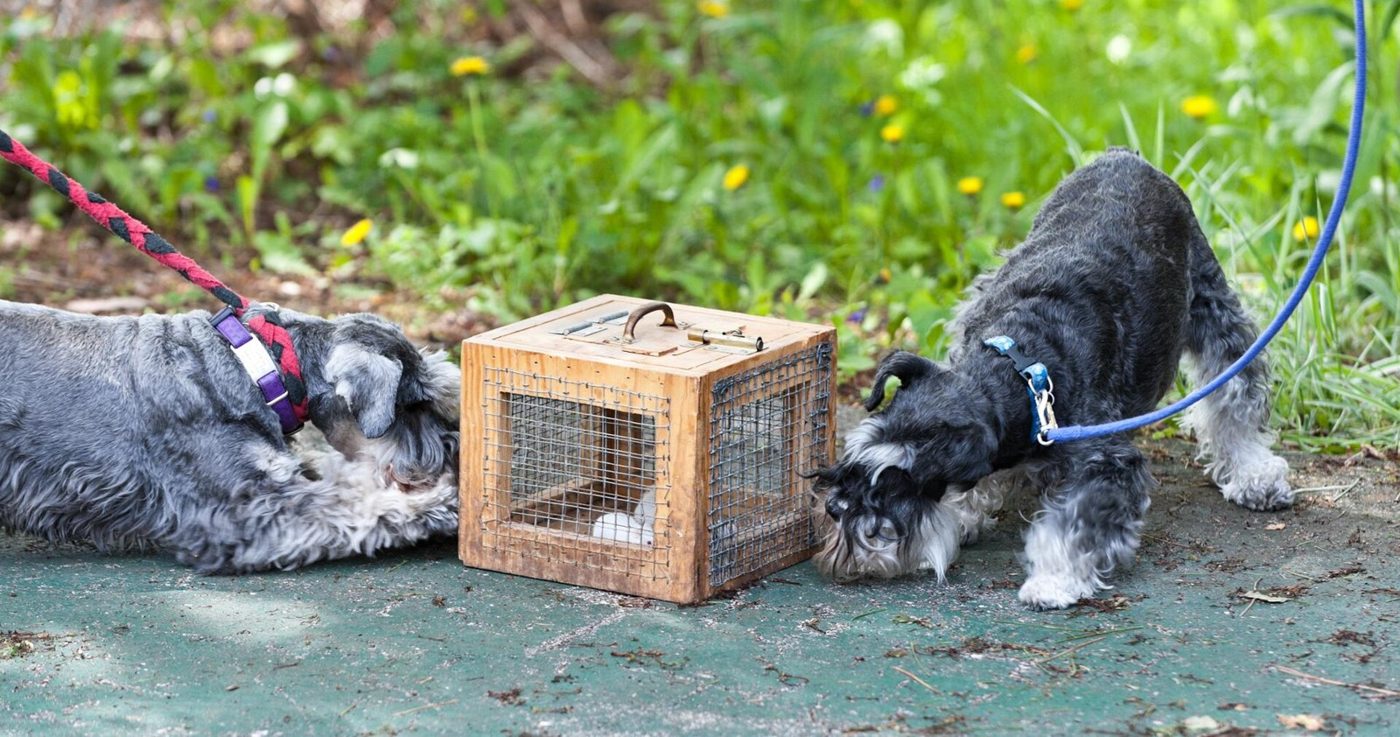
Earthdog: the sport that lets diggers dig
Dachshunds and small terriers were bred to go underground. Earthdog tests give that instinct a safe job: tunnels, scent and a rat that never gets touched.